Eve Blog


Can orgasms actually help with period pain? (yes, and here's the science)
If you needed a scientifically backed excuse to lean into your libido during your period, this might be it. Here are some of the most commonly asked (or quietly searched 👀) questions about periods and orgasms - along with what’s actually going on in your body. Can orgasms help with period pain? Summary: Orgasms release dopamine, a neurotransmitter that increases your pain tolerance and reduces cramp intensity. The science: When you climax, your brain releases dopamine, a chemical messenger involved in how your body processes pain. More dopamine means a higher pain tolerance, which means less cramping. That's not a wellness myth, that's your own chemistry doing its thing. Endorphins released during orgasm also improve blood flow to the uterus, which helps ease cramps further and promotes relaxation. The combination of the two is why a lot of people notice they feel genuinely better after sex or masturbation during their period. Why do you feel more turned on during your period? Summary: It's hormonal. Oestrogen rises as your period starts while progesterone stays low, which drives a higher sex drive during this phase. The science: Before your period arrives, both oestrogen and progesterone drop sharply. Once bleeding starts, oestrogen begins to climb again while progesterone stays low. That specific hormonal combination is what causes a noticeably higher libido for many people during menstruation. Your body isn't being strange. It's being quite deliberate. Can orgasms make your period end faster? Summary: Possibly. Oxytocin released during orgasm causes uterine contractions that may help push blood out more quickly. The science: When you orgasm, your body releases oxytocin, the hormone responsible for controlling uterine contractions. Those contractions during climax are thought to help the uterus expel blood faster. Researchers haven't fully confirmed the mechanism yet, but the pattern is well-documented enough that it's unlikely to be coincidence. If you've ever noticed your period seemed lighter or shorter after sex, that's probably why. Are orgasms during your period actually better? Summary: Often, yes. Increased blood flow during menstruation raises genital sensitivity, which can make orgasms feel more intense than usual. The science: Menstruation increases blood flow and circulation throughout the pelvic region, which also increases arousal and sensitivity. The result is that orgasms during your period can feel noticeably stronger than at other points in your cycle. Your body has set up quite the incentive structure here. ...What about the mess? Summary: Manageable. Menstrual discs and cups sit high enough to contain blood during sex or with toys. The science: If the appeal is there but the practicalities feel off-putting, menstrual discs and cups sit higher in the vaginal canal and can contain blood during internal penetration. Worth knowing if that's the thing holding you back. Just note they are not a form of contraception, and STI protection still applies during period sex. In summary… Your period and your sex drive are more connected than most of us were ever taught. And acting on the desire can be really helpful for pain, sleep, cycle length, and mood. School sex-ed skipped this one entirely. We're catching you up.
Learn more
All things gut health: what does it actually mean and how could it be affecting you?
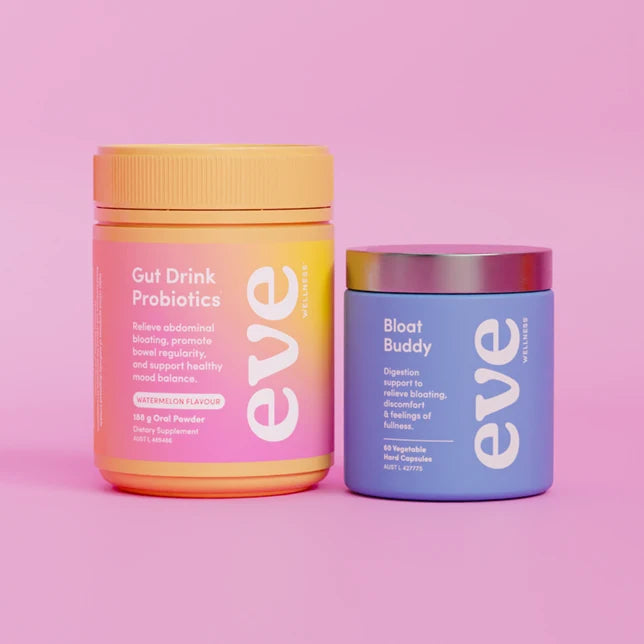
Your gut can be a bit of a drama queen. One day she’s fine. The next? Bloated by 10am, making weird noises in meetings, and giving unpredictable right when you have plans. Love that for us. But here’s the part we don’t talk about enough. Your gut isn’t always reacting to what you ate. It’s also intertwined with your mood, your stress, your sleep… all the behind-the-scenes stuff. Ever had butterflies before something big? Or felt sick when you’re stressed? That’s your gut and brain in constant chat. So when your gut’s off, it’s not always a food thing. It can feel like your whole body’s a bit out of sync. So… what’s actually going on? Your gut is home to trillions of bacteria. Some are the good guys, some… not so much. When things are balanced, your digestion runs smoother, your stomach feels calmer, and life is generally less chaotic. When that balance is off, that’s when you get the bloating, the irregularity, the “why is this happening to me” moments. And if you’re also a part of the IBS crew, you already know it’s not just occasional. It’s something you’re often thinking about, planning around, and managing in the background. The low-effort way to support it We’re not here to tell you to overhaul your life, cut out everything you love, and become a gut health expert overnight. Sometimes it’s about trying to integrate small, consistent changes that actually fit into your routine. Like having a daily drink that supports your gut without making it a whole thing. Gut Drink Probiotic was made with that in mind. It’s easy, it’s watermelony, and it doesn’t ask much from you. Just mix, sip, done. The “why it helps” bit Without getting too sciencey about it, there are two key players in there. One is a probiotic strain called Bacillus coagulans, which has been studied for helping reduce the occurrence of symptoms of medically diagnosed IBS, while also supporting bowel regularity and feeding the good bacteria in your gut. The other is glycine, an amino acid that supports your gut lining and also plays a role in sleep and calming your nervous system. Which makes sense, because gut and stress are very much intertwined. And yep, the dose actually matters. That’s kiiiind of our thing. Real talk We’re not saying one change will suddenly fix everything overnight, or that it’s going to work the same for everyone. Bodies are complex, guts are moody, and what works for your mate might not work for you. But giving your gut a bit of consistent support? That’s a solid place to start. Especially if you’re dealing with bloating, irregularity, or symptoms of medically diagnosed IBS. The takeaway If your gut’s been acting a bit unpredictable lately, you’re not alone. Honestly, most of us are out here just trying to figure out what our stomach’s doing day to day. The goal is feeling a bit more comfortable, a bit more regular, a bit more like yourself. And sometimes, that starts with actually paying attention to your gut. Groundbreaking, we know. Trust your gut. Literally. Love, Eve xx
Learn more
Horny On Your Period? Here's Why
If you’ve ever caught yourself thinking: Why am I horny on my period? Is it common to feel horny during your period? Why does my sex drive increase on my period? Can your period make you horny? You’re definitely not alone. Here’s what’s going on… Your hormones are shifting (and it shows up in your libido)Right before your period, oestrogen and testosterone dip. A few days into your bleed, oestrogen begins to rise again. You start feeling hot, turned on and horny. Your body is more sensitive down thereDuring menstruation, blood flow to the pelvic area increases, which can heighten sensitivity and arousal. When your uterus contracts (cramps), it can stimulate nearby nerves adding to that turned-on feeling. Plus, increased natural lubrication can play a role too. Hello horn. Your libido changes across your cycleAround ovulation, libido typically peaks. The few days surrounding ovulation are the only days of the entire month when you can actually get pregnant. So, naturally, this is when your body kicks your sex drive into overdrive. In the luteal phase, progesterone rises, which can dial things down slightly. We love progesterone for its soothing, calming effect on the mind and body. However it can be a bit of a debbie downer in the doing-it department. There are some feel-good benefits tooSex or orgasms during your period may help ease cramps, support mood, and improve sleep. Bottom line…This is something many menstruators experience, driven by natural hormonal and physical changes in the body. Looking for extra support? If your libido feels a little all over the show across your cycle, Turn Me On & Brighter Mood Bundle is designed to support desire, mood, and hormonal balance - so you can feel more like yourself, more often.
Learn more
5 Food Habits For Healthy Hormones
The food you eat has the power to either support the optimal functioning of your hormones, or contribute to hormone imbalance. So when it comes to balancing your hormones, nutrition is a pretty big deal. Plant-based, low carb, keto, fasting, celery juice, gluten-free, dairy-free, organic, vegetarian, paleo—type ‘the best way to eat for health’ into your Google search bar and plethora of conflicting information that comes back both conflicting and overwhelming. Probably enough to make you think this topic is far too confusing to understand, let alone put into practise. We get it. That’s why we’re taking this topic right back to the tried and true basics of nutrition for women’s health. We asked our Health Consultants, (A.K.A the wonderful team that includes clinical nutritionists, NZ registered dieticians and naturopaths), about what they eat to balance their hormones & why. Rather than bore you with food diaries, we’ve turned what they told us into 5 ways to support your hormones through food. A word of caution: These tips are fairly broad, because no offence dear reader, but we don’t know you from a bar of soap. We are all so different. For example, some people do really well on starchy carbs such as potatoes, kumara and gluten free grains, whereas for others, these types of foods can leave them feeling sleepy and unsatisfied. 1. BREAK-THE-FAST WITH PROTEIN Healthy hormone eating 101: to keep your hormones happy, you need good blood sugar balance, which means eating to stay satisfied and to avoid feeling shaky, unfocused or moody when hungry (all signals that your blood sugars might be taking a nosedive). Our Health Consultants warn against signs such as craving carbs and sugar, or feeling constantly hungry. These are signals that you’re not fuelling your body well, and this can contribute to unhappy hormones. Starting the day with a nourishing, balanced breakfast that stabilises your blood sugar levels is one of the best and simplest ways to support balanced hormones. The thing is most traditional ‘breakfast’ food is high carb, has a high glycemic index (GI) - meaning that it turns to sugar in the blood very fast - and leaves you looking for the snacks come 10am. The solution: eat a protein-rich breakfast within a couple of hours of waking. Protein supplies amino acids which are crucial for the body to repair itself and make its own essential hormones. Protein also provides steady, sustainable energy that will keep you full for longer. Our Health Consultant’s favourite sources of protein at breakfast time include: 2-3 free range eggs; A natural protein powder added to a smoothie (avoid ones with any funny looking ingredients or sugars e.g. maltodextrin, sucralose etc); Nuts & seeds; Natural greek yogurt (if you tolerate dairy well); Salmon or other fresh fish; Leftover mince or steak (free range and organic preferably). By starting your day with a good hit of protein, you should find you feel grounded and focused, and don’t feel a need to snack before lunchtime. Try it and report back! 2. DON’T SKIMP ON HEALTHY FATS For a while, fat was the most misunderstood macronutrient of all. For years we were told that fat free = healthy, and that cholesterol and saturated fats were bad. Thankfully for our health and hormones, science has shown the error of our ways and now demonising dietary fats is so 2005. Our Health Consultants love healthy fats as they contain a range of key fat-soluble vitamins, such as A, D, E, and K, and provide slow burning energy to compliment the energy from carbohydrates and keep blood sugar stable. Fats are also the precursors to our hormones—they are the raw materials we need to make hormones like progesterone, oestrogen, and testosterone. While high cholesterol is a concern for some people, low cholesterol can also translate to hormone imbalance. Our Health Consultants tell us that it’s all about eating the right kinds of fat to support healthy cholesterol levels, and steering clear of the not so great fats that increase the bad kind of cholesterol. Great sources of the right kind of fat include: Avocados; Nuts & seeds; Eggs; Coconut yoghurt; Cold pressed oils such as extra virgin olive, avocado and coconut; Fatty fish such as salmon and sardines. Avoid canola, rice bran and vegetable oils. 3. CARBS AREN’T THE ENEMY Low carb or ‘keto’ diets are somewhat of a buzz in the health and fitness world at the moment. The idea behind them being that without glucose from carbohydrates for energy, the body is ‘forced’ to use fat for fuel instead. While this sounds great in theory, the reality is that our bodies are a whole lot more complicated than that. Our Health Consultants have observed through clinical practice and scientific research that female sex hormones can be particularly sensitive to both under eating, and restricting entire food groups such as carbs. From a physiological standpoint, forcing the body to use ketones (fat) for energy can be more stressful than using glucose from carbohydrates. This can increase cortisol levels and throw your delicate balance of sex hormones out of whack, as the two are made from the same precursor hormone, pregnenalone. While we’ve seen some women with insulin-resistant hormone imbalances such as PCOS might do well on lower carbohydrate diet, many women find they simply need carbs to feel balanced, energised and healthy. Research suggests that non-inflammatory starches such as rice, potato, pumpkin and kumara are actually calming on our nervous systems; and can support the cortisol and stress response, and restful sleep. Eaten alongside a source of both protein and fat, gentle carbohydrates promote stable blood sugar, energy and mood. Win, win, win. 4. GREENS ARE IMPORTANT Eat your greens. Quite possibly the most basic but most important nutrition advice there is. Before you roll your eyes and tell us you’ve heard it all before, just listen. Leafy greens such as spinach, kale, watercress, silverbeet and micro greens are amongst the most nutrient-dense foods on the planet and are also full of fibre, folic acid, chlorophyll, and a whole heap of other micronutrients and phytochemicals. No where else can you find calcium, magnesium, iron, potassium, phosphorous, and zinc, as well as vitamins A, C, E and K in a tasty, ready-to-eat package. Our bodies need nutrients to do pretty much everything; like make all of our hormones, give us energy, rejuvenate our cells, detoxify last nights pinot gris and so on. If you don't eat foods with the nutrients you need, your body cannot produce hormones correctly or maintain hormonal balance because it simply doesn't have the building blocks to do so. A top tip from our Health Consultants is to aim for a serving of greens with each meal. Whether that's in a smoothie, salad, slaw, stir fried, steamed or otherwise - it’s all good. Just play around to find what works for you. For more support in the nutrient department, try All Systems Glow -All-in-one support for your skin, hair, and hormones. 5. SOUL FOOD IS IMPORTANT TOO Yes, food is fuel and nourishment; but it’s also a whole lot more than that. It’s pleasure, experience, comfort and often a form of socialising too. Our Health Consultants always highlight with their clients that eating nutrient dense wholefoods doesn’t need to mean feeling restricted, deprived or as though you’re missing out. At Eve, we’re pretty passionate about eating well, but we’d be lying if we said there were never gluten-free brownies cooling in the kitchen or dark chocolate being passed around at 3pm. It’s all about finding a way of eating that’s sustainable, and usually that means finding the sweet spot between feeding your body and your soul. Let’s face it, even stressing about food is still a form of stress, which we probably don’t have to tell, isn’t that great for your hormones either. The key takeaway from our Health Consultant’s point of view? Do the best that you can, when you can, and try not to get caught up in the details. Nutrition isn’t all or nothing; something is always better than nothing.
Learn more
Answering Your Burning Questions with Sexoligist: Chantelle Otten
We have teamed up with renowned sexologist Chantelle Otten to bring you a special guest blog series. This month she is answering all the hot and heavy questions our Evies submitted! Q: Can stress really affect fertility? After nearly 2 years TTC and I keep getting told just to RELAX… A: Trying to conceive (TTC) can be an emotional rollercoaster, and while stress and fertility are closely linked, the idea that simply “relaxing” will solve everything is an oversimplification that often adds to the frustration. Chronic stress can impact reproductive hormones, disrupt ovulation, and even affect sperm quality. The body’s stress response prioritises survival over reproduction, which can make conception more challenging over time. However, stress isn’t the sole factor in fertility, and placing the burden of “just relaxing” on yourself isn’t helpful. Instead, focus on what you can control - nourishing your body, prioritising rest, and finding ways to support emotional wellbeing, whether that’s through movement, therapy, or mindfulness. If you're struggling, working with a fertility specialist can help explore potential medical factors and give you a clearer path forward. You deserve compassionate, evidence-based support - not dismissive advice. Q: How can you make TTC fun? It is so difficult when it feels so planned! A: Trying to conceive (TTC) can easily shift from something exciting to something that feels like a chore, especially when it becomes all about tracking, timing, and planning. The key to keeping it fun is bringing back pleasure and intimacy without making every moment feel like a means to an end. Focus on connection first - schedule date nights that have nothing to do with fertility, explore new ways to be intimate outside of penetrative sex, and lean into touch, playfulness, and shared experiences. Try mixing up locations, adding sensual elements like massage or mutual exploration, or even incorporating toys and lube to enhance pleasure. Most importantly, give yourself permission to enjoy intimacy without pressure. TTC is a journey, and keeping the spark alive will not only support your relationship but also your overall wellbeing. Q: Why did my libido suddenly become non-existent when I’m in a healthy long-term relationship? A: A sudden drop in libido, even in a loving and healthy long-term relationship, is common. To be honest it happens to most people! Desire is complex and influenced by physical, emotional, and psychological factors. Stress, hormonal changes, medication, mental health, or even feeling too comfortable in routine can all play a role. Plus! Desire takes work, which often gets lost in the daily grind. Instead of seeing it as a problem, view it as a signal. Ask yourself: Have there been changes in my body or lifestyle? Am I feeling emotionally connected to myself and my partner? Exploring new ways to foster intimacy - whether through physical touch, new experiences, or open conversations - can help reignite desire. A shift in libido doesn’t mean something is wrong; it’s an opportunity to tune in and understand what your body and mind need right now. Q: Tips to get back in touch with my Fem energy? Sex has become painful and I feel I have lost touch with intimacy and don’t know what to do. A: If sex has become painful, it’s understandable that intimacy feels out of reach. Pain creates a disconnect between body and desire, so the first step is addressing the discomfort. Painful sex is not normal, and you don’t have to just put up with it - seeking support from a pelvic health physiotherapist, sexologist, or doctor can help uncover the root cause and provide solutions. If you don’t get the answers you need please seek a second opinion or book in with me! It’s my specialty. Exploring lubricants, relaxation techniques, or different forms of intimacy that don’t involve penetration can also be a way to ease back into pleasure without pressure. Beyond that, reconnecting with your feminine energy is about embracing pleasure in all areas of life. Engage in movement that feels good - whether that’s dancing, yoga, or simply stretching. Indulge in self-care that makes you feel nurtured, like a warm bath, body oil, or wearing fabrics that make you feel sensual and confident. Taking small steps to bring pleasure and embodiment back into your daily routine can help rebuild your connection to intimacy on your own terms. Q: How many times a week/month is normal or healthy to have sex/get off? Are there health benefits to regular intimacy? A: There’s no magic number when it comes to how often you should be having sex or masturbating - it’s about what feels right for you. Some people thrive on daily intimacy, while others feel satisfied with much less. Rather than focusing on “normal,” think about what feels good and sustainable in your life and relationships. That said, regular intimacy - whether solo or partnered—does have benefits. Orgasms release endorphins and oxytocin, which help reduce stress, improve sleep, and even boost mood. Sexual activity can also support circulation, pelvic floor health, and overall wellbeing. But it’s important to remember that quality matters more than quantity. Whether it’s once a week or once a month, intimacy should be enjoyable, not an obligation. If your libido has changed and you're concerned, checking in with a doctor, sexologist, or therapist can help explore any underlying factors.
Learn more
The Fertility Lesson You Were Never Taught in Sex Ed
Most of us grew up with some version of sex ed—you know, the scare tactics that made it seem like if you so much as looked at someone the wrong way, you’d either end up pregnant or with an STD. But fast forward a decade (or so), and suddenly, not getting pregnant isn’t the issue—it’s figuring out how to actually make it happen. And surprise! It turns out getting pregnant isn’t as simple as skipping birth control. In fact, conception is more like a perfectly timed miracle. So, let’s fill in some gaps that health class never covered. 1. How Many Days a Month Are You ACTUALLY Fertile? Not as many as you think. While sperm can survive for up to five days in a women's reproductive tract, an egg only has about 12–24 hours to be fertilized after ovulation. That means your actual fertile window is around 5–6 days per cycle—and timing is everything. 2. Hormones & Nutrition: Why a Regular Cycle (and a Well-Balanced Diet) Matter A healthy menstrual cycle = a healthy ovulation pattern, which = a higher chance of conception. Hormones like estrogen and progesterone work in a delicate balance, and they rely on key nutrients like selenium and zinc to function optimally. If your cycle is irregular or you’re missing key nutrients, it can make getting pregnant that much harder. 3. How Long Does It Take to Make a Quality Egg (or Sperm)? Your body doesn’t just whip up high-quality eggs or sperm overnight—it takes time! On average, it takes about 100 days (or 3 months) to develop a healthy egg or sperm cell, which is why preconception support is key at least three months before trying to conceive. 4. When Should You See a Doctor When Trying to Conceive? If you’ve been actively trying for 12 months (if under 35) or 6 months (if 35 or older) without success, it’s time to check in with a fertility specialist. It’s also worth seeing a doctor sooner if you have irregular cycles, known reproductive health conditions (like PCOS or endometriosis), or any other concerns about fertility. 5. How Much of Infertility Is Due to Sperm? Spoiler alert: It’s not always about the egg. Male factor infertility accounts for about up to 50% of infertility cases across the globe —meaning sperm health is just as important as egg health when trying to conceive. Zinc and selenium support healthy sperm formation & function and overall reproductive health for both men and women. Knowledge Is Power Getting pregnant is so much more than just skipping birth control. It’s about understanding your body, supporting it with the right nutrients, and giving it time to prepare for conception. So whether you’re actively trying, thinking about trying, or just here for the info—remember: sex ed might have left out the details, but we’ve got your back.
Learn more
Has Your Libido Left The Building? Let us help you find it!
If your libido has been pulling a disappearing act lately, you’re not alone. One minute, you're feeling yourself—confident, connected, and ready for action. The next? Meh. Your sex drive has packed its bags and ghosted you. Here’s the thing: fluctuations in libido are totally normal. Life happens, stress piles up, hormones shift, and suddenly, the last thing on your mind is getting it on. But the good news? With a little insight (and the right support), you can absolutely get your sexy back. So, let’s break it down—what’s actually getting in the way of your libido, and how can you bring it back? 4 Common Reasons Why Libido Takes a Back Seat (and What to Do About It!) 1. Stress & Overwhelm: The Ultimate Mood Killer Ever tried to feel sexy while your brain is running through tomorrow’s to-do list? Stress doesn’t just live in your mind—it shows up in your body too. When you’re overwhelmed, your nervous system goes into fight or flight mode, which can disrupt blood flow, dampen desire, and make it hard to connect (with yourself or a partner). 💡How to Bring It Back: Stress management is key! Daily rituals like movement, deep breathing, and prioritising pleasure (in every form 😉) can help. Psst. Turn Me On is packed with zinc to help support inner calm and hormone balance, making it easier to get out of your head and back into your body. 2. Hormonal Changes: The Libido Rollercoaster Hormones run the show when it comes to sexual wellness. Whether it’s birth control, menopause, or natural fluctuations throughout your cycle, imbalances can leave you feeling off. 💡How to Bring It Back: Supporting hormone health through diet, movement, and targeted supplementation can make a world of difference. Our Eve range was created to help you get your hormones back on track. 3. Busy Schedules & Lack of Sleep: Too Tired to Get Turned On Between work deadlines, endless to-do lists, social plans, staying active, keeping up with friendships, and somehow remembering to drink enough water—sleep often falls to the bottom of the priority list. The result? Low energy, mood dips, and a libido that’s definitely not in the mood. 💡How to Bring It Back: Prioritise rest like it’s your job—because your hormones (and your sex drive) depend on it. 4. Feeling Like Sex Is Just Another To-Do When intimacy starts feeling like an item on your never-ending checklist, it’s a sign that something’s gotta shift. Sex isn’t meant to be another task—it’s meant to be fun, playful, and fulfilling. 💡How to Bring It Back: Take the pressure off! Reconnect with yourself first—solo exploration (wink) is a great way to rediscover what feels good. When you know what you like, it’s way more fun to bring a partner into the mix. The Bottom Line: Libido Is a Reflection of Overall Wellness Your sex drive isn’t just about what’s happening between the sheets—it’s a reflection of your overall well-being. Stress, hormones, energy levels, and mindset all play a role. We created our latest supplement, Turn Me On, to support you (and your partner) in finding your best sex life, with science-backed ingredients that help reduce stress, support hormonal balance, and promote a healthy libido. Because feeling good isn’t just about doing the deed—it’s about wanting to. And you deserve to feel that spark.
Learn more
The Art of Self-Love: How to Romance Yourself Every Day
At Eve, we love LOVE. But we also know that loving yourself has to come first and self-love isn’t always easy. Between the chaos of daily life, the pressure to put others first, and the ever-growing to-do list, it can be easy to forget that the relationship we have with ourselves is the most important one of all. Self-love isn’t just about spa days and affirmations (although those are great too!). It’s about truly showing up for yourself—whether through rest, pleasure, or setting boundaries—and recognising that you are worthy of the same love and care you give to others. So, in the spirit of celebrating YOU, here are a few ways (big and small) to nurture the relationship you have with yourself: Ways to Romance Yourself Every Day 💖 Make It a Date Night (for One) Who says date nights are just for couples? Treat yourself to a solo night in—cook your favourite meal (or order in from your go-to spot), put on something that makes you feel amazing, and set the scene. Light a candle, pour a glass of wine (or kombucha, we don’t judge), and make this moment about YOU. 📖 Write a Love Letter (to Yourself) Reflection is powerful. Take a few minutes to jot down 5-10 things you love about yourself or moments you’re proud of from the past year. You’ve accomplished more than you think, and sometimes you just need a reminder. Keep this letter somewhere safe and reread it whenever you need a confidence boost. 🚫 Say 'NO' (Without Guilt) Boundaries are hot. Whether it’s skipping plans to rest, turning down extra work when your plate is full, or simply choosing to do what feels right for you, knowing when to say “no” is one of the greatest acts of self-love. Protecting your energy is just as important as sharing it. ✨ Reconnect with Yourself (Wink) You know what we mean. Self-pleasure isn’t just about feeling good—it’s about knowing your desires, your body, and what brings you joy. Feeling connected to yourself in this way can bring confidence, relaxation, and even better intimacy with a partner (if that’s what you want). Take this as your sign to put that ‘Do Not Disturb’ sign to good use. 🛌 Rest, Guilt-Free In a world that glorifies being busy, choosing to rest is a radical act of self-love. Listen to your body when it’s telling you to slow down. Sleep in, take a midday nap, or simply give yourself permission to do absolutely nothing without guilt. Your mind and body will thank you. 🎶 Dance Like No One’s Watching Blast your favorite playlist, grab a hairbrush microphone, and dance around your room like you did as a kid. Moving your body in ways that feel fun and freeing is an instant mood booster. Bonus points if you sing at the top of your lungs! 💆 Invest in Your Well-Being Whether it’s booking that long-overdue massage, finally trying that supplement you’ve been eyeing (ahem), or simply taking the time to nourish your body with good food, self-care isn’t selfish. Prioritising your well-being is an essential part of self-love. 🌿 Spend Time in Nature There’s something magical about fresh air, sunlight, and getting your feet in the grass. Take a walk, head to the beach, or sit in the park with a book. Reconnecting with nature is a simple yet powerful way to feel more grounded and at peace. 💡 Learn Something New Self-love also means investing in your growth. Take up a hobby, read about something you’re curious about, or try a skill you’ve always wanted to learn. Feeding your mind is just as important as nourishing your body. The Bottom Line Your relationship with yourself sets the tone for every other relationship in your life. The more love, care, and attention you give to you, the better you’ll show up in every other aspect of your life. So whether it’s a big, indulgent self-care day or simply taking a moment to check in with yourself, never forget that you are worthy of love—today and every day. 💛
Learn more
Breaking Down Sexual Wellness Myths with Sexologist Chantelle Otten
We have teamed up with renowned sexologist Chantelle Otten to bring you a special guest blog series. This month she is breaking down sexual wellness myths that can hold us back from feeling confident, connected, and satisfied in our intimate lives.
Learn more